May 3rd, 2025
I recently read a book from P.D. James, an author best known for her crime novels. The book I read was The Children of Men, which falls into the category of speculative fiction, an off shoot of sci-fi. The story is set in a world of the future where no children are born. In the novel the planet has been without a human birth for a quarter century, and our species is slowly but surely heading for extinction. Books about a dystopian future derive their power by describing a world that is much like our present one, but one that has also taken a frightening trajectory. These stories can get stale when the future becomes the now. However, The Children of Men still has an edge to it, because what it predicts is in some ways still plausible.
The novel never explains why humans all become infertile simultaneously. It doesn’t need to do that. What the author does is give a detailed and poignant description of a society that is collapsing. James writes well, and she conjures up an image of a decaying England that is both tragic and occasionally funny in a dark way. The overwhelming feeling in the book is that of hopelessness. The unspoken, but obvious, question in the story is. “Why do anything?” Most of the characters in the book are just killing time or waiting for time to kill them. Without a new generation, the future has no meaning.
Does this book matter? I think it does. It mirrors the world around me, but in a distorted way, like a funhouse mirror. Are women still giving birth to children? Yes, of course. The world’s population is still growing. However, the pace of growth on our planet is uneven and it is slowing overall. Some parts of the world, especially sub-Saharan Africa, still have explosive population growth. Other places have steep declines. Russia, China, Japan, and most of the EU are experiencing a loss of people. Even countries with modest growth, like the United States, only have more residents because immigration, not from the birth rate within the national borders.
Is it a bad thing for the world’s human population to stabilize or even decline? Maybe not. Every other species on the planet would probably benefit from fewer homo sapiens. However, humanity has never before dealt with a universal loss population. There have been great disasters in the past, like the Black Death, that decimated whole nations, but nothing quite on this scale. The current decline in the birth rate has kind of snuck up on us. It is nothing like the sudden wave of infertility that James mentions on her novel.
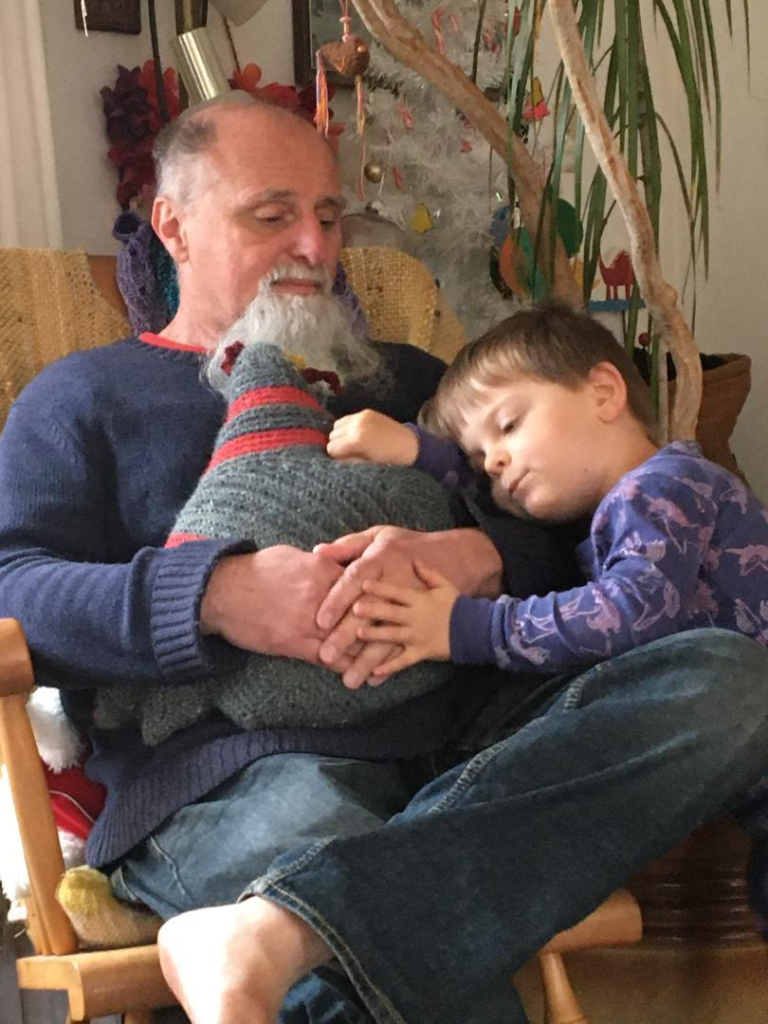
I think about this sort of thing for two reasons. First of all, I am objectively old. If the United States government gives me Social Security and Medicare, then I am by definition elderly, and my time on earth is clearly limited. Second, my wife and I are caring for our four-year-old grandson, Asher, whose future stretches out before him like an endless vista. The Children of Men reminds me of my mortality, and it pounds home the preciousness of every child.
I was the eldest of seven boys in my family of origin. Large families were common when I was young. This is no longer true. There are many reasons for this: the higher cost of raising a child, increased access to contraception, anxiety for the future, changing gender roles, etc. Some of these reasons are good, some perhaps not so much. The fact is that, when I was a child, having kids and rising a family was the priority for most people. Now, it just one goal in life among many. Once again, I don’t know if the change is good or bad. All I know is that things are different and we, as a species, need to adapt.
For example, much of what we do is dependent on growth of some sort. Capitalism only works when there is growth. The economies of most of the world require constant growth to raise the standard of living. Humanity worships “more”. Enough is never enough. In order for capitalism to function, there has to be population growth to drive economic growth. So, what do we do when there aren’t enough producers? Or enough consumers? A number of countries are wrestling with these problems right now. How long will it take before we have to radically change our consumption of material goods and services? How long before we radically change our values to focus on things that cannot be bought and sold? Our current economic system is not sustainable.
I want to go back to the mood expressed in James’ novel. It is often a depressing book, and as I age, I identify more and more with the zeitgeist. It is hard to keep going when things are falling apart both inside and out. That is why Asher is so important. Asher can be a real pain in the ass at times, and he wears me out. But he gives me hope. Every day he shows me who he is and who he may become. He is constantly learning and growing. He needs me in order to grow, and that gives me purpose. He gives meaning to my life.
Asher is the future. On my own, I am not. I experience the future through a little boy. He makes it all worthwhile.
 Frank is Emptiness