Books

August 16th, 2023

Now that it is fashionable in parts of the United States to ban and/or burn books, it seems like a good time for a booklover, that being me, to make a comment or two. I have also noticed that in Texas school libraries are being closed. I suppose it’s just the next step in keeping dangerous ideas away from innocent children. Or perhaps, Texans have assumed that reading books is an outdated activity, and students are better off using more modern technology. I don’t know. Somehow, it all reminds me of Fahrenheit 451 by Ray Bradbury. But, of course, that’s a book, and has probably been banned somewhere by now.

I have always been a voracious and omnivorous reader. In my teens I would check out books from the library without any notion what the subject matter was. My father was okay with me having my nose in a book. He seldom bothered to see what I was reading, except for one time when I brought home a copy of Catch 22 from Joseph Heller. He was very upset that I had that book in my possession.

He angrily told me to take the book back and snarled, “Be careful what you read.”

That seemed confusing to me at the time, and it still is. How can I be careful about what I read until I start reading it?

It appears that currently there are many folks in our country who are eager to help young people be careful with what they read. It seems to me that the methods being used to prevent underage individuals from perusing unsafe publications are rather quaint. Banning books has that old school Third Reich vibe that probably appeals to some people, but who are they kidding?

A generation ago, when my own children were young, it was pointless for me to tell them not to read something. That just gave the book or magazine the attraction it needed. Once I condemned a certain type of reading material, it became forbidden fruit. Then they had to read it, just to find out why their grumpy old man didn’t like it.

That was in prehistoric period before the advent of the Internet. Now, damn near every kid has a smart phone and knows how to use it. Any young person can look up any document anywhere at any time. Who needs a library? Banning books might make parents feel like they are doing their duty to protect their impressionable children, but it’s a futile effort. Everything that these parents want to restrict is out there and easily accessible to their kids.

None of my adult children read books for pleasure. I don’t know if any of their contemporaries do. They read, but everything is online. The only young people I know who like to get cozy with a good book are the ones who are doing time in the slammer. I’ve sent books to them. They have been grateful for that, seeing as their options for entertainment are limited.

It’s different for me. I have a love affair with books. I like the fact that they are tangible. I like the ability to read them in bed and lay them aside if I get tired. The authors of the books I enjoy are like old friends. I come back to them over and over. I always like to hear from Steinbeck or Dostoyevsky or Tolkien. I have shelves full of books, some of them yellowing with age. My favorite books aren’t there, because the books that I love most, I give away to people who will appreciate them. Those are books that I want to share.

I once self-published a book. That was years ago. I will never do it again. I discovered that publishing a book is more work than writing it. I don’t want to sell a book that I wrote. It’s like selling myself, and I find that distasteful. The experience did give me a greater appreciation for the books of other authors. Even if I totally disagree with the opinions found in a book, I have to respect the fact that the writer put his or her heart and soul into the work of creating it.

I wish the book banners felt the same way.

Cleaning Up

August 17th, 2023

I had the room key in my hand. I shut the car door and looked around for the right room number on one of the doors of the motel. There at the end of the building on the second floor was the room I needed. Oddly enough, the room was the closest of all of them to the neighboring liquor store. That seemed convenient.

The motel was old and a bit shabby. Many years ago, when the road was the main transportation artery between Milwaukee and Chicago, this motel probably had a thriving business. Back in the 60’s, the freeway was built, and this highway and all of its cozy motor lodges became part of a sluggish economic backwater. The motel didn’t have any high rollers stay overnight anymore. Now, it was a temporary home for people skidding on a downward path. A room in this place was better than sleeping in the backseat of a car, but not much better.

I got the room key from a person in the ER. They had been brought there by ambulance after a drug relapse. The individual needed me to collect their personal belongings from the motel room and turn in the key to the front office. I asked if the person had left any items in dresser drawers. They shook their head slowly and then rolled over on the hospital bed. They closed their eyes to sleep.

I opened the door of the motel room. The drapes were closed, and all the lights were on. It was utter chaos in a very small space. That was no surprise to me. I have been in other rooms like that one, for similar reasons.

The motel room made me remember when I helped to clean out my brother’s tiny apartment after his death. His apartment didn’t have much in it, but it still seemed to take forever to pack and move everything. The place was a mess, just like his life. The sink was filled with dishes encrusted with dried food. The refrigerator was empty except for a light bulb and some items that were clearly well beyond their shelf lives. I found a disorderly pile of mail. Buried in it was a birthday card I had sent to him four months before his death. It was still unopened.

I had no intention of cleaning the motel room. I was going to find the person’s stuff, and then get the hell out. The room had a bad energy. A relapse is a grim and lonely event, often leaving broken behind broken glass and broken dreams. This room wasn’t too bad, the person had not been staying there for very long. I found clothes scattered on the floor. I found miscellaneous objects on the bed, half-hidden under the crumpled sheets. Next to the toilet was an almost empty case of alcoholic beverages. Empty cans were lying on every horizontal surface. The odd thing was that there was still one full can in the box. It’s rare that a person going on a killer binge will leave anything unopened.

I gathered up all the things I could find. It is likely that I missed something. I don’t care. The person who mislaid it probably won’t remember where it was anyway. A relapse seldom leaves many memories, mostly just bad feelings and a gnawing paranoia.

I threw the bag of stuff into the back seat of the car. Then I walked into the office. There was a sheet of plexiglass in front of the counter, with a thin slot for business transactions. The sheet of plexiglass was partially covered with numerous notices and rules for the guests. The nastier the motel, the more rules there are for the people staying there.

A young man came out after I pressed the buzzer on the counter. He smiled at me. I told him that I grabbed all of the occupant’s belongings from the room. He asked me,

“Are they alright?”

I shrugged. How do you define “alright”?

I told him, “Thanks for the help”, and tossed him the key.

Mailbox

August 14th, 2023

We were eating dinner when a black SUV pulled into our driveway. We seldom get visitors, so I got up from the table to investigate. I reached the front door just as a middle-aged woman and a tall, gawky teenager stood on our porch. The woman looked flummoxed, and the young man no expression on his face at all.

The woman, who I expect was the mother of the teenager, immediately started her monologue. She spoke rapidly:

“We were driving along, and we hit your mailbox. There were kids in the street, and we tried to avoid them, and…”

I thought to myself, “Fuck, not again.”

We live along a tight curve in the road. Our neighbor shares this section of the street with us. Drivers, even people who live nearby, often take the turn too quickly, and my neighbor and I often fix or replace our mailboxes. About six months ago, in the dead of winter, a man from down the street made a power slide through the snow and slush, and then slammed into the mailbox from the guy next door. He hit it hard, breaking the wooden post off at ground level and ending up in the ditch in front of my house. The mailbox was a dead loss and the front of the car had more than cosmetic damage. I am still picking up shards of broken plastic from my lawn.

Our family had already experienced an extremely stressful week when this lady and her adolescent son showed up at our door. We were dealing with a major health issue, and it was difficult for me to appreciate the woman’s emotional turmoil. I felt exhausted, and I honestly didn’t care about this mishap. I just stood in front of her and listened as she went on and on.

“As I said, we were trying to avoid the children in the street, and we pulled too far to the right…”

Who is this “we” she was speaking of? Were they both driving the car? I noticed she had a pink cast on her left arm. The kid was probably the driver. The young man was stood silently next to his upset mother. She had probably said words to the effect,

“Just shut up and let me handle this.”

I sighed.

“Okay, let’s look at it.”

She kept talking as we walked over to injured mailbox. I stared at it without speaking. It was scratched and bent. The thing was just a shell of thin sheet metal, so it wasn’t designed for collisions. It was hanging loose from the post. I shrugged.

My lack of emotion apparently made the woman more nervous. She expected some kind of reaction from me, and I was too tired to give her that satisfaction. She spoke more quickly, and I listened less.

She stammered, “Of course, we’ll pay to replace the mailbox, with something comparable. Or we could replace it ourselves if you like. How does this mount on there anyway?”

I didn’t look at her. I just said, “Go ahead and fix it. I was going to need a new one anyway.”

She replied, “Good.” She had her son hand me a scrap of paper with their contact information on it. He just looked at me blanky. He had the beginnings of a moustache on his upper lip.

I asked her, “So, did your car get damaged?”

She glanced at the right side of her car with a pained expression. Most of the car had a deep horizontal scrape along the side. It wasn’t terrible, but it was definitely noticeable. I wondered if she was going to call her insurance. How do you explain that a mailbox suddenly jumped out in front of you?

Mother and son went home. I went into the garage and grabbed a hammer, nails, and pliers. After about half an hour, I had the mailbox secured to the post, and more or less upright. I could open and close it with a bit of effort. Good enough.

I haven’t heard anything from the mailbox manglers. Maybe they will come and replace it. Maybe not. It’s only a mailbox.

Starting from Scratch

August 3rd, 2023

I received an email a couple days ago from a friend who is working diligently to help Afghan refugees. My friend is a peace activist who often visited people in Kabul before the Taliban overran the country again. She knows many young Afghans, especially young women, and she has been trying to get them to places where they can live in safety. There are so many Afghans that have fled from their native land, and my friend’s efforts are sometimes futile. Yet, she keeps looking for new homes for the people she knows and loves. She doesn’t give up.

My friend hooked me up with a young Afghan family in the fall of 2021. She thought that I could help them in some way. If nothing else, I could let them know that they were not forgotten. A husband, his wife, and their infant son were stuck in Pakistan. Both parents had been working with Americans, and so they were targets of Taliban retribution. They wanted to come to the United States, but that was not possible. Eventually, they we accepted into a small European country. They were three of the eight refugees that this country allowed to immigrate there.

One reason that my friend connected me with this particular family was that the husband had been trained as a helicopter pilot. He had gone to flight school in UAE and had flown missions for about five years with the Afghan Air Force. My friend reasoned that this man’s profession would appeal to me, since many years ago I flew helicopters in the U.S. Army. We also had a connection in that he is caring for a small child, and I am currently doing the same thing.

The recent email from my peace activist friend concerned this man’s attempt to use his flight skills in his new homeland. He wants to be a pilot again. The problem is that he doesn’t have the qualifications required by government of this European country. He needs to go back to flight school, at the cost of 70,000 Euros, to get up to speed. That is a daunting prospect. Even if he can find the time and money to become qualified as a rotary wrong pilot in his new home, then what?

My friend attached a letter sent to her by somebody she knows who is assisting this Afghan with his efforts to fly again. Part of the letter is basically the man’s resume. I looked at it, and one thing jumped out at me.

This Afghan pilot has only 700 hours of flight time.

When I got out of the Army in 1986, I had 800 hours. That may seem like a lot, but it’s not. I didn’t even try to find work as a helicopter pilot because I knew that I did not have the flight experience to compete with other vets. A warrant officer pilot who retires from the military might have thousands of flight hours. When I left the Army, there were still probably hundreds of Vietnam vintage pilots working in the civilian market. They had jobs. They could get hired. I couldn’t.

I wound up going into the trucking industry, an environment that was completely alien to me. I stayed in that field for twenty-eight years. It wasn’t what I wanted to do. It wasn’t what my previous experience prepared me for. I had to try something new and scary, because I had to care for my wife who was pregnant with our first child. I had to go way out of my comfort zone to survive.

This young Afghan pilot has his heart set on flying again. I understand that. I miss flying. I haven’t flown since 1986, and I probably never will again. He may have to think outside of the box. He’s a smart man. He knows two languages, and he is rapidly learning his third. He is in the same situation that I was thirty-seven years ago. He has to provide for his family, and he needs to find a new career soon. He has a gun to his head.

I don’t have all the facts. I don’t know what the job market is like in his new country. Generally, rotary wing pilot jobs are much scarcer than positions for fixed wing pilots. Maybe It’s different where he is. Maybe things have changed radically since I was desperately searching for work in the 1980’s. I don’t know.

This guy is a vet, so he has all the obstacles that any veteran of any army has when looking for his or her first civilian job. The HR people he meets probably won’t understand what he did in the military. Corporate management won’t necessarily care that he was in the army. They won’t care that he is a refugee. The people who do the hiring will only have one question for him:

“Can you make us money?”

This guy and his family have already been through the wringer. They are living in a new country, with a new language, and with new customs. They have left nearly everything from their old lives behind.

More than likely, this man will wind up in a new line of work. Being a pilot is another thing that he may have to leave behind.

Eco-Justice Center

July 31st, 2023

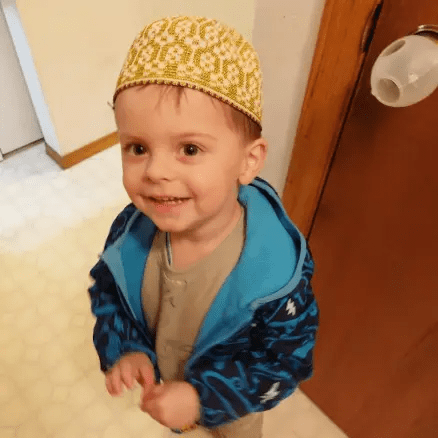
Asher likes alpacas.

That sounds like the title of a children’s book. It might as well be. Asher is 2 1/2 years old, and my wife and I care for him fulltime. He really does like to look at alpacas. Fortunately, there is a farm close to us that raises several of the animals. The place is called the Eco-Justice Center and it has an interesting history.

On Thursday evening, my wife and I took Asher to the farm. Asher knew we were going to visit the alpacas because he could see the farm’s windmill from far off. The people there were hosting a fundraising event called “Pacas & Pints”. Being as we live in Wisconsin, almost every community activity seems to involve craft beer. In this case, beer from the Littleport Brewery was available (an IPA or an amber ale).

The folks at the Eco-Justice Center had cleared out an area in an open field to serve as a makeshift parking lot. A guy with an orange flag guided us to a parking space in the grass. He welcomed us to the farm, and we told him that we were familiar with the place. We had been in attendance at the ceremony when the center was dedicated and blessed by Bishop Sklba.

The man smiled and said, “Get out of here! Really? That had to be back in 2004. I’ve only known about this farm since 2019.”

The Eco-Justice Center was founded by members of the Dominican Sisters. They have a mother house in Racine nearby. The center was originally a family farm that was dangerously close to becoming a subdivision. The religious sisters bought the land with the intention of maintaining it as a farm and using the site to teach about environmentalism. They put great emphasis on caring for the earth. Some of the nuns were already elderly back then when they started the project. The phrase “elderly nuns” is kind of redundant in our day and age. There are very few younger sisters. However, these women were, and some still are, remarkably active. They accomplished what they set out to do. I admire them all.

Karin and I took Asher across the creek to the admissions booth. It was $30 a person to get in. They didn’t charge the little guy. Once again, we told the women there that we had been involved with the center over the years. It felt a bit awkward, because the people we had known weren’t there anymore, and the people we met were all new to us. We would ask: “Do you remember Sister Janet?”, and the person would answer, “Oh yeah, she doesn’t live in the farmhouse here anymore, but she still comes to the farm now and then.”

Karin and I were, and are, friends with Sister Janet. She and the other sisters rebuilt and expanded the old farmhouse, and gradually made a lot of other improvements. They raise chickens and goats, in addition to the alpaca herd. On the center’s website they state that: “Renewable energy features include solar hot water, solar electric, geo-thermal heating and cooling, and wind electric from our 10Kw wind turbine. Currently, 50% of our electrical use is generated from the solar panels and wind turbine.” These ladies have been busy.

Most of the work on the farm has been done by volunteers. I was involved with that effort for many years. In a way that was unintended. I used to work as a supervisor at a trucking company. Corporate headquarters insisted that each facility do an annual volunteer event to support the local community. My boss at the time identified me as the company bleeding heart liberal/social activist and assigned me the task of organizing this volunteer work. He made it clear to me that the company would provide no funding for the event, nor would it supply insurance protection for the participants.

My initial reaction to this situation was not positive. I basically said, using corporate jargon,

“Fuck all you guys! I’ll just do whatever I want to do!”

My boss agreed to that. “Just get it done.”

That’s when I got to know Sister Janet. She was the organizer. She had an encyclopedic knowledge of everyone in Racine County who could help her to keep the farm running. I was added to her mental Rolodex. We worked out a schedule where I would round up some folks from my workplace to help out at the Eco-Justice Center one Saturday per year. she would come up with a list of suitable tasks. Mangement at my company encouraged/coerced people to show up as volunteers. It was actually a good time for most of the attendees. The farm has a good energy, and we got a lot done in a short period of time. It’s hard for me to remember now, but I think we helped at the center for a decade or so.

The farm is currently run by a nonprofit that is affiliated with the Dominican Sisters. The members of the nonprofit are mostly young women. These women love the farm and the animals there. They are following in the footsteps of the older sisters, their spiritual mentors. I doubt that many of these young women will take religious vows, but they are on a good path.

Going back to Pacas & Pints, Karin and I each scored a beer. They gave it us in a glass with the image of an alpaca on it. Then we went to the food booth. They had sandwiches from Dragonpit BBQ. That stuff rocked. I bought a brisket sandwich. The meat had a subtle smoky flavor and was soft as butter. Asher ran off while were ordering our food. We had to chase him over to the goat corral. I think it’s easier to corral a goat than it is to keep track of a toddler.

There was a guitarist playing on the porch of the farmhouse. People were listening to him while they waited for the guided tour of the alpacas. He played a passible rendition of “Stockholm” by Jason Isbell. That’s kind of an obscure song. He also did a couple old Steely Dan tracks.

We didn’t get to finish eating when the tour began. We took the food home. A woman showed us the animals and explained their behavior. Asher was interested. A guy from the local newspaper was snapping photos. He went around and asked people their names after he took their pictures. He took a shot of Karin and Asher feeding an alpaca. I bet Asher gets in the paper.

After the tour, Asher was tired. We wandered around the farm for a while. He was fascinated by the black cat who seems to be everywhere at once. Asher went to bed shortly after we got home. So did I.

This morning I took Asher back to the Eco-Justice Center. We watched the alpacas munching grass in the pasture. Asher found the black cat.

Asher and Karin getting ready to feed the alpacas. Photo from the Racine Journal Times.

Israel

July 24th, 2023

I frequently attend the religious services at an Orthodox synagogue. I have been going to the morning prayer on Shabbat for almost fourteen years, and I have good friends at the shul. I’m not Jewish, and I have no plans to convert, but I have been accepted as part of the community. I respect the people there, and they respect me. It’s an odd relationship, but it somehow it feels right.

I have close friend who keeps in touch with me. He knows that I go to the synagogue. He recently wrote me an email that contained the following message:

“Tell the folks at synagogue this morning or whenever you see them next to have a little chat with the voters back in Israel about why they keep electing a nut like Netanyahu.”

Wow.

I don’t think that my friend quite understands how things work at the synagogue. I have never heard anybody discuss Israeli politics at the synagogue. The people there frequently affirm their support for Israel (we pray for the State of Israel during every Shabbat service). However, nobody gets into a debate about the political situation over there. I would never, ever, give my opinion of Netanyahu, or any of the other political figures in Israel. That would be like grabbing the third rail with both hands.

I am usually not shy about expresses my views. If you have read my essays, you already know that. However, I know where to draw the line. I know when my comments will do more harm than good. As a non-Jew, I have no credibility in this situation. I was in Israel just once, forty years ago. I don’t have skin in the game.

Almost everyone else at the synagogue has a deep, visceral connection with Israel. Some of them have lived there. One man had a son in the Israeli Army. A rabbi at the shul studied at a yeshiva in Israel. Many of the members of the synagogue have friends and/or family in Israel. They know the country intimately. Even the people who have spent years in Israel refrain from talking about the politics there. The subject is radioactive.

With the current rise in antisemitism, the people at the synagogue are circling the wagons. The antisemitism is real. I had some Jew-haters throw antisemitic literature in my driveway a few months ago. There is always an armed guard at the door of the synagogue during services. A community that feels threatened will come together and avoid divisive topics if possible. The members of congregation rally around Israel. We had a guest speaker at the last service who stated,

“Israel is more important now than it ever was.”

There were no dissenting comments from the assembly.

Are the people I know concerned with the political upheaval in Israel? Of course, they are. I have a friend from the shul who told me that one time he expressed his views on the situation and was shut down by somebody saying to him,

“You don’t live there.”

For what it’s worth, I have a Muslim friend who has Palestinian roots. I never talk about Israel with her either. There is no upside to that kind of conversation. It’s too emotionally intense. It’s like picking at a scab.

Do I ever discuss the events in Israel with anyone from the synagogue? Yes, but I do that very carefully. I want to understand what is going on there, and I want to understand the feelings of the Jews here. I am not sure that I will ever really get it. It is all wrapped up in Jewish history, religion, and ethnicity. To really comprehend it all, I would have to live it, and I can’t.

One thing I know. I will never give these people any advice.


An Old Man’s Bike

July 13th, 2023

My two sons both ride motorcycles. The similarities between them end there. My youngest son, Stefan, has a fast Suzuki that he has totally pimped out. My oldest son, Hans, is a Harley guy. He had a crotch rocket years ago, but now he likes the big bikes. Until just recently, he had a Harley Electra Glide. He doesn’t have it anymore, but I will explain why that is later in this essay.

Stefan told me once that Harleys are motorcycles for guys who are old and fat. I thought about his comment today because Milwaukee is the hometown of Harley Davidson, and the city is currently celebrating the 120th birthday of the company. The streets are full of hogs, rumbling like gasoline powered bass guitars in a heavy metal band. Based on my observations of the Harley riders that have been cruising through town, I have to admit that there is some truth to what Stefan said to me. Most of the bikers are mature, and not a few of them are corpulent. It makes sense in a way. In order to even afford a Harley, the biker has to be old enough to have some money in the bank. Those bikes are expensive.

Hans is not old. He’s only thirty-six. He definitely does not have a lot of money in the bank. He bought his first Harley almost a decade ago, when he was working for some fracking outfit in east Texas. It was brand new. Hans had just got out of the Army, and he was making more money than he had ever had in his life. I think he got a Harley Sportster, and he loved that bike. Unfortunately, the motorcycle melted down to scrap in a house fire at the end of 2015. Shortly after that, oil prices tanked, and Hans wasn’t making the big money anymore. He wasn’t making any money at all. It was a long time before he could get another Harley.

When Hans had the Sportster, he rode with other vets down the country roads in Texas. He enjoyed the camaraderie. Hans had a few adventures with his redneck biker buddies. He did things that in retrospect were probably unwise, but I don’t think he regrets any of them. Riding was therapeutic for Hans. He has PTSD from his time in Iraq, and riding the Harley was kind of like Zen meditation for him: it was just the bike, the road, and him. He let the Harley choose the route.

Several years ago, Hans got a deal on a used Harley. Many people ride bikes down in Texas, so sometimes a person can get a cheap one. He rode it a lot until it developed engine problems. He didn’t have the money or the time to fix it (he was newly married with a baby boy at home). The bike sat in a puddle of oil in his driveway for months. It was a static display. He still hasn’t been able to repair the thing.

Hans has had accidents. He’s been lucky and/or blessed. He has gone over the handlebars at least once. Hans has informed me that is not the best way to wreck a motorcycle. Fortunately, he has never broken any bones, but he has been banged up a bit.

A couple months ago, Hans took out a loan, with his wife’s blessing, and bought the 2007 Electra Glide. Just week or so ago, he laid the bike down. Hans was making a slow turn at an intersection, and the rear wheel of the Harley lost traction on some loose asphalt. The bike went from underneath him. Once again, Hans’ guardian angel was watching over him. The Electra Glide weighs over 800 pounds. It could have crushed his leg when it fell, but it didn’t. He just got his share of road rash as the bike slid on the pavement.

The insurance totaled out the Harley. Hans wanted to fix it, but the insurance company said “no”. Hans is more than a little depressed. He told me in his slow drawl,

“Dad, I need to have two wheels beneath me. You know that. Some people have an accident and never get back up on a bike. I am getting back on one. I need to ride. You know what I mean, Dad?”

I know that it is healthy for Hans to be on a motorcycle. His wife agrees with that. Yeah, it can be dangerous, but it is good for his mind and soul to be riding.

He will get another bike before he’s old and fat.

Getting a Head Start

July 25th, 2023

Karin was at the doctor’s office yesterday morning. I was at home with little Asher, who was taking a well-deserved nap after visiting three different playgrounds. After I had settled Asher into his bed, the phone rang. It was Karin’s sister, Christa, calling from Germany.

I was uneasy when I picked up the phone. Christa’s husband had been very sick for a long time. For the last few years, Franz’s health had been declining. Franz had a cardiopulmonary disease. He couldn’t get enough air, and he had been using oxygen for quite a while. Several weeks ago, he had been admitted to a hospital in Munich, and the doctors there had told him that he was too weak to get a lung transplant. Franz went into hospice.

I wasn’t surprised when Christa told me that Franz was dead. What did surprise me was the matter-of-fact way that she told me. Christa did not seem upset. She wanted to know where Karin was. I said that Karin was at the doctor. Christa asked me if Karin was okay. I explained that she was fine. Then Christa told me that she would call back later, and she wished me well.

The brief call had been all in German. I stayed with that when I texted Karin. I wrote:

“Christa hat angerufen. Franz ist gestorben.”

Karin Skyped with her sister later in the afternoon. They conversed for a couple hours while I kept Asher busy. Karin hasn’t seen Christa in person for probably twenty years, but they stay in touch.

I have been thinking about Christa’s reaction to Franz’s death. I know that they loved each other dearly. Franz and Christa had come to the U.S. many years ago, and they visited with us. I got to know Franz when they were here. Franz was a good man. He understood English pretty well. He had lived in Ireland for years. He used to read my blog posts and comment on them in German. Christa and Franz met each fairly late in life, and it was clear to me that they were meant to be together.

Christa knew that Franz was dying. She could begin the grieving process while was he was still with her. It was kind of like that when my mother died from Alzheimer’s disease. I had been saying goodbye to my mom for years before she finally left this earth. Christa had been saying goodbye to Franz for a long time already.

That’s in stark contrast to how it felt when my younger brother, Marc, died. Marc was twenty-eight when he was killed in a car wreck. The shock of his death was overwhelming to everyone who knew him. I wasn’t ready for him to die, although I suppose a person is never ready for the death of a loved one. Christa probably wasn’t ready for Franz to go. Or maybe she was.

She had a head start.

In the Middle of the Story

July 8th, 2023

We all enter this world as part of somebody else’s story, and we always arrive in the middle of that person’s story. Perhaps we don’t come on stage at the exact center of another person’s narrative, but our beginning is not the same as theirs. When we are born, we are confused and disoriented, and we often stay in that condition until we die, at the end of our particular saga. Everybody else on the planet continues to play their part in the glorious, chaotic show. We leave as we came, in the middle.

My friend, Ken, writes fiction. I don’t, mostly because reality provides me with more than enough material. When Ken writes a short story or a novel, there is a clear beginning and satisfying end. As Chekov said, “”If in the first act you have hung a pistol on the wall, then in the following one it should be fired. Otherwise, don’t put it there.” A writer, particularly a fiction author, strives to tell a story with very few loose ends. Most readers prefer it that way.

Life is not like that, not at all. Every day of my life there is at least one WTF moment, usually several. Often, these confusing events get resolved. Sometimes, there is no quick answer. Sometimes, there is no answer at all.

As an example, yesterday my wife came home from spending time with her knitting group. When she arrived here, she was dizzy to the point of losing her balance. The vertigo did not go away, so we went to the ER. The people there gave her numerous tests to rule out the possibility of a stroke. The CT scan and the other tests showed no evidence of a stroke. However, my wife is still having dizzy spells. Why? We don’t know. We don’t even know if we will ever know. At this moment in time, we are stuck in anxious uncertainty. We have no idea how this chapter ends.

A reader often enjoys a thrilling story, a cliff hanger. They want to keep turning the pages of a book to find out what happens next. However, the person also wants to know how the tale ends. It doesn’t much matter if the ending is happy or sad. They just want some kind of conclusion.

Books have conclusions. Life does not. Even death is not really an end. I have been to a number of funerals that were frustrating because the deceased left so many things undone and so many questions unanswered. The person is no longer in the physical world, but his or her messy, incomplete lives will echo in our memories for years to come.

A good writer would end this essay with a summary that tidies everything up.

I won’t.

Courage

June 29th, 2023

“Can I see your ID?”

I pulled my driver’s license out of my wallet and dropped on the counter in front of the young woman.

She looked at it and said, “Okaaaay, thank you.” She wrote my name down on some bureaucratic form. Then she asked,

“And what’s your phone number?”

I gave it to her.

“And the bag is for this person?” The woman told me the person’s name.

“Yeah.”

“Now, what do you have in the bag?”

“Uh, clothes hangers, feminine hygiene stuff…”

My wife interjected, “Lotion.”

“Yeah, and cigarettes. I’m not sure what else…”

The young woman cut me off, “That’s good enough. I just needed some idea of what you all brought in. Thank you.”

My wife, Karin, and I took our seats in the waiting area while the girl put the bag somewhere in the depths of the office.

As we sat, I noticed a sign above the counter. It read:

“Color of the Day/Color de Dia”

Below that was written: “blue/azul”.

The sign confused me. What was this “color of the day” thing? Were the residents of this drug treatment center supposed to wear certain colors on certain days? Was it some kind of way for the patients to show solidarity?

I hadn’t read far enough. Below the color, it said,

“If your color is posted, you have to drop before noon on that day. No excuses!”

Ohhhhhhh.

Suddenly, it was all clear to me. Each resident was assigned a specific color. When that color was posted in the morning, every resident with that hue had to take a random drug screen. The person we were visiting at the treatment facility no doubt was assigned a color.

Anybody who is in residential treatment is required to be clean and sober. That seems glaringly obvious, but patients still want their fix, and some try to beat the system. That makes no sense, but if a person is in treatment for an addiction, they by definition aren’t thinking clearly. Some folks just can’t do without the drug, even while they are trying to get away from it.

The people running the treatment facility try to stop contraband from entering the facility. If something does slip in, then the random drug screen will show when it’s going out. My experience with these treatment centers is that there is zero tolerance for smuggling, or for using. If a resident is caught doing either of those things, they leave, immediately.

It has to be like that. The fact is that all the residents are battling an addiction, a life-threatening disease. Most of them are probably there because they damn near died. They overdosed on something, wound up in the ER of a hospital, and then went to detox. A person who is using in a treatment center is like somebody with COVID in an old folk’s home. That person has to go. Lives are at stake.

When my wife and I first entered the building, we met a group of women residents who were coming for their afternoon therapy session. Almost all of them were smoking. That’s pretty standard. If a person can’t get the drug of choice, then they go to the next best thing. The cigarettes will probably kill them eventually, but not nearly as fast as meth or smack. These people don’t need to be completely drug free. At this point, they just need to survive.

It’s easy for me to observe the residents and think, “Damn, they look rough.” Of course, they do. People getting chemo for cancer look pretty damn rough too. Anybody who is fighting a chronic, debilitating illness is going to look rough.

I saw something else when I looked at the residents. I saw courage. These people are hurting. There is no doubt about that, but they are also fighters. They haven’t given up. The person we were visiting has not given up. These folks are trying to rebuild their lives, and the odds may be against them. They still have hope. They keep going.

I admire that.