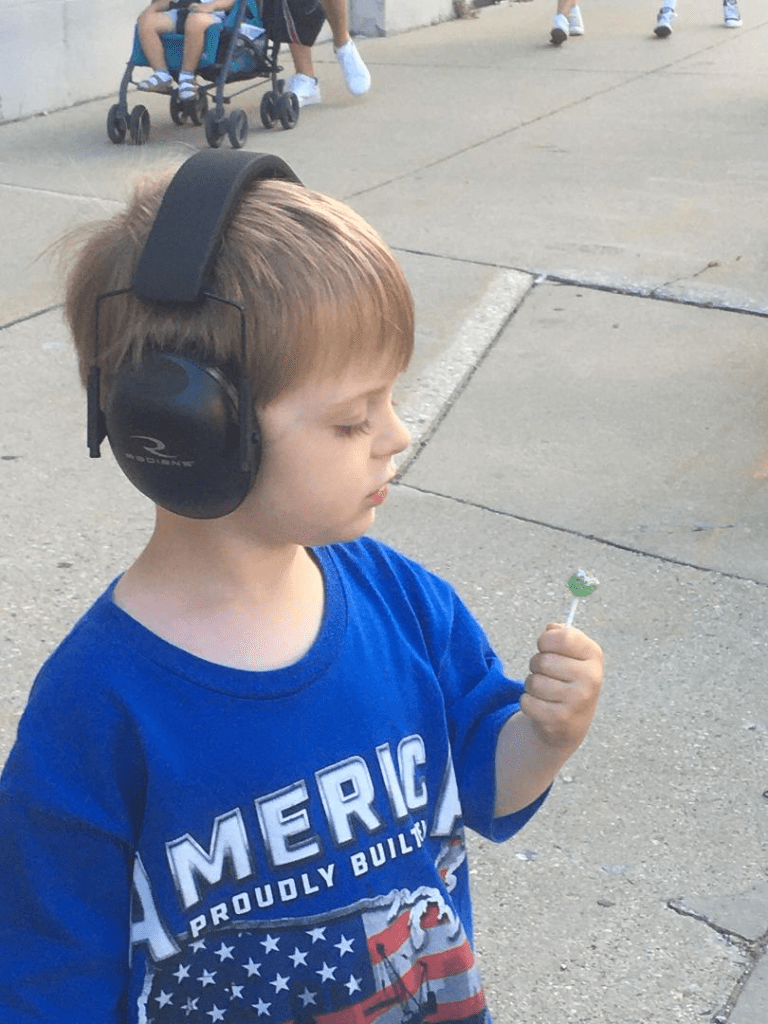
A Friend of Mine

June 16th, 2024

“We need to overthrow this rotten, decadent, putrid, industrial capitalist system.” – Dorothy Day, founder of the Catholic Worker movement.

A poster displaying this quote and a picture of Dorothy Day hangs on the wall of Brian’s farmhouse. Brian and his wife, Betsy, are Catholic Workers and quite proud of that fact. Brian and Betsy live in an old house on a small parcel of land in the rolling hills of southern Iowa, only a few miles from the Missouri border. The two of them are my age (old), and they care for goats and chicken, along with a flourishing garden. They are remarkably self-sufficient. They are devout Catholics who practice what they preach, which is something that is both commendable and rare.

I will attempt to very briefly explain who the Catholic Workers are. It’s hard to describe them with any accuracy, but I will try. The Catholic Workers were started in NYC in the 1930’s by Dorothy Day and Peter Maurin. Day was at one time a communist and also an anarchist. She eventually found her home in the Catholic Church, which despite all evidence to the contrary, can be very radical about certain issues. Catholic Workers are essentially Catholic anarchists. That sounds like an oxymoron, but it’s not. They believe in the Beatitudes, and they act on that belief. Because of that, they are peace activists and advocates for the poor and outcast in our society. They live simple lives with a minimum of material goods. Their community has no hierarchy. I cannot call the Catholic Workers an organization because everybody somehow does their own thing while working toward the goal of world that is without war and without poverty.

Brian is a friend of mine, which seems unlikely almost to the point of absurdity. He is two years older than I am. While I was a cadet at West Point, Brian was starting his career path in NYC in a Catholic Worker house. Brian actually had the chance to meet and speak with Dorothy Day. Hanging on another wall in his house is a framed letter from a bishop asking Brian to testify in the process of her canonization by the Catholic Church. As I went on to be an Army officer and a helicopter pilot, Brian became an outspoken antiwar protester. Brian also has in his home a photo of himself carrying a sign that reads, “Support the Troops! Bring them home!”.

I met Brian first in 2014. I joined him for a 165-mile-long peace walk. Later, I was with him for a demonstration against drone warfare at Creech AFB in 2017. We both got arrested at that event. I saw him this week for the first time since Covid hit. Karin, my wife, and Asher, our three-year-old grandson were with me. I had never been to his home before. Karin commented later,

“The house seemed kind of messy.”

Then she added, “But I’ve never been in a Catholic Worker house that wasn’t messy.”

Oh, so true. There are numerous books piled everywhere, along with projects begun but not yet completed. Icons and religious pictures cover the walls. Honestly, Brian and Betsy’s house is no messier than our own. Especially since Asher became part of our household, our home is just barely controlled chaos. I don’t mind a house that is disarray, because often it means that the place is alive with activity. I am always suspicious of homes that are immaculately clean.

Karin and Betsy connected quickly. They are both fiber goddesses. Betsy had two awesome floor looms for her weaving. She and Karin had a lot of shop talk.

Brian and I know a lot about each other’s lives. His father was in the Army when Brian was very young. Brian knows that our son, Hans, fought in Iraq. Somehow, the two of us connect.

Brian and I had long, freewheeling conversations, which for me was the whole point of the visit. Betsy and Karin sometimes joined in. One time we were all sitting outside, Asher included, at their picnic table, eating a delicious meal prepared by Betsy. Brian shared some locally brewed beer with the adults. Betsy asked me about West Point. She had lived in the Hudson Valley for a while. Then she mentioned something unexpected,

“We know a woman who graduated from West Point. She was in the first class with women.”

That got my interest, since she is a classmate of mine.

Betsy continued, “She is a nun in the convent nearby. It was strange, she said that she knew she had a calling, even before she became Catholic. She was only in RCIA at the time. (RCIA is the Rite of Initiation for Adults). I can’t remember her name. It was something Polish. Did you know her? She retired from the Army and then decided to become a sister. Doesn’t that seem odd?”

I don’t know who this classmate is. I told Betsy that it really wasn’t all that strange that this officer would become a member of a religious order. After World War II, the monasteries were overflowing with veterans who wanted to become monks. Those men had seen the worst of what our fallen world could offer, and they just wanted some peace. They were used to following orders, so the discipline involved was no obstacle to them.

Betsy asked me if it was horrible at West Point. I had to think for a while. Finally, I said, “Yes”. Some grads are nostalgic about their USMA experience. I’m not. It wasn’t all bad, but some of it sucked mightily.

Then I said, “If I hadn’t gone to West Point, I would have never met Karin.”

Betsy smiled and agreed.

I added, “And Asher would not be here.”

Brian chimed in, “And you wouldn’t be at this table either.”

Brian and Betsy were good with Asher. They loved him. Betsy enthusiastically read a Dr. Suess book to him. We slept overnight at their house. Brian made us eggs for breakfast. They have plenty of eggs. We talked for a while. Asher didn’t want to leave. I didn’t want to either, but we had to move on.

We said our goodbyes. Brian gave me a big hug.

I told him, “I love you, my friend.”

He replied, “Thanks for coming. I value your friendship.”

I admire Brian and Betsy. They have integrity. They are as dedicated to their cause as much as any soldier is to theirs. They have devoted their lives to creating a peaceful and just world. They may never live to see it, but they have faith that someday someone will.

I am proud and grateful to have Brian as my friend.

As if It Never Happened

June 10th, 2024

My son, Hans, came home from work. He had been pumping concrete in the Texas summer sun for hours, and he looked rough. He was wearing a t-shirt with jeans tucked into his cowboy-style work boots. His cap had dark sweat stains on the headband. His shirt, jeans, and boots were dusty. Hans’ face had that kind of grime that is the combination of fine dirt and stale perspiration. His face and neck were both tanned and sunburned, a deep reddish-brown color. He was standing upright, but just barely.

I asked him how his day went. He just stared at me and shook his head. He cracked open a cold can of Lime-A-Rita and took a swig. He talked about his job and then we talked about work injuries and health insurance. He mentioned that his left knee bothered him. As is his wont, Hans somehow switched the topic to his time in the military. He told me,

“You know, those VA benefits aren’t that good.”

“How so?”

He replied, “Well, you know I got my knee fucked up in Iraq, right?”

“Yeah.”

“I ain’t never got any help with that.”

“How exactly did that injury happen?”

Hans poured some more of his drink down his throat. Then he told me,

“We were on a patrol. Some guy fired an RPG at us, which didn’t make no sense, since we were dismounted. You know how when the adrenalin kicks in and everything moves more slowly? Well, I’m watching this RPG flying at us. They don’t fly straight. They do this:”, and he quickly moved his left hand around in front of him in a totally random manner.

He drank again.

“They go every which way. I’m looking at it and thinking, ‘Too low! Go up! Up!’ It did, and it went over our heads and then the rocket hit a wall behind us. The concussion knocked me off my feet. They told me after that I flipped twice before I hit the ground.”

“I woke up with the medic on top of me. We were good friends. He was a big ol’ country boy. Not fat, but big. Cornfed, you know. He got me conscious by making some painful move up around my shoulder blade. I said to him,

‘Why am I laying here and why are you on top of me?!’

The medic told me that was fine. Dad, you know what they mean in the Army when they say you’re fine. It means you are not fine. Then the guy tells me, ‘Don’t look down’. I did.”

“Well, I could see my foot and it was all cockeyed.” Hans showed me with his hand that his left knee was bent about ninety degrees in the wrong direction.

“I told the medic, ‘This don’t look right’. That’s when he gave me a shot in the neck with something and I went out. It was something strong. They said that I woke up during the helicopter flight to the hospital, but I don’t remember anything.”

Then Hans asked me, “What was that friendly country over there?”

I replied, “Kuwait.”

“Yeah, Kuwait. They flew me to Kuwait. They fixed up the knee and had me wear a brace on it for a while. When we got back to the States, I asked about the knee. The said that they had no record of me getting hurt.”

“Oh?”

“Dad, we were the last people out of Iraq. We were in a hurry. They left the records behind. Hell, the Iraqis probably got my social security number.”

Hans took another drink. His knee is injured, and the U.S. government will probably never do anything to help him with that. I suppose if Hans had the time or energy, he could pursue the issue to get treatment from the VA. He won’t. He doesn’t think it’s worth fighting about. He’ll just deal with the pain and pop another beer.

A Jury

May 30th, 2024

In comparison to citizens of many other countries, Americans are not required to do much. We are not forced to serve in the military. We are not obligated to vote. It is not usually necessary for us to perform any duties outside of paying taxes and serving on a jury if called to do so.

Serving on a jury is a curious requirement. Only countries whose histories are strongly influenced by English law have juries. Other countries have judges who decide court cases. It is only in countries like the United States where the legal fate of a citizen is decided by a jury of their peers. That is an extraordinary thing.

I have been on two juries. I served as foreman on both of them. Neither trial was about anything dramatic. Both cases were civil suits, and probably could have been settled out of court if the parties involved had been a bit less stubborn. However, the lawsuits went to trial and twelve ordinary people were selected to decide on the issues. The experiences were very educational, at least they were for me.

I bring all this up because Donald Trump has just been convicted of 34 criminal offenses by a jury in New York. The public response to this verdict has been deafening. Some people have shouted that justice has finally been done. Others have loudly decried Trump’s trial as a kangaroo court and said that it was a travesty of justice. I am not going to attempt to second guess the members of the jury in Trump’s trial. I wasn’t there. I don’t know what kind of discussions they had during their deliberations. I only know what I did when I was a juror.

There is a plethora of films about courts and juries. Almost all of the videos are overly dramatic, and many of them are inaccurate. For a person who has never been on a jury, probably the best film to watch would be an old, black and white film called “12 Angry Men”. The show is from 1957 and it is somewhat outdated. All the jurors are white men in the movie. However, the film does a good job of showing how the jurors deliberate. There are often differences of opinion, and sometimes emotional outbursts. People disagree, but they work toward a consensus. The process really is work.

A jury trial is the direct descendent of the old medieval trials by combat. Instead of champions fighting with the swords, we have lawyers stabbing with sharp words. The idea is the same. One side will win it all, and the other side will lose. The court system does not like cases to go to trial. Trials are expensive in time, energy, and money. If a case does go to trial, that means there is no longer any possibility of compromise. It’s all or nothing.

I remember as foreman of the jury having to announce the verdict to the court. After I stated our decision, I could see members of one party visibly relax. When I looked across the aisle, I only saw shock and utter loathing. Oh well.

That’s the system. That’s how things work. As Hunter S. Thompson once said, “Buy the ticket. Take the ride.” If you have gone to trial, you bought the ticket, and you can’t get off the legal rollercoaster until the ride comes to a complete stop. Deal with it. As Thompson also said, “if it occasionally gets a little heavier than what you had in mind, well…maybe chalk it off to forced consciousness expansion.” That’s good advice if you lose the case.

One thing I noticed as foreman was how intensely serious all the members of the jury were about the trial. Everybody was well aware that the trial was no joke. We had the responsibility to reach a verdict, and our verdict would undoubtedly put somebody in a world of hurt. That knowledge weighed on our minds.

Both times that I was on a jury there was an eclectic number of people serving along with me. We came from different races and ethnicities, different parts of the county, different economic levels, different political viewpoints. This diversity was helpful to us during our deliberations. A variety of backgrounds prevents group think. We saw things from different angles.

No human being is total objective. Therefore, no jury can be completely impartial. The goal is to have a jury that relies on the evidence and follows the instructions of the judge. It is possible that our decisions were incorrect, but we treated our work as jurors as a sacred duty. We gave it our all.

There are many parts of our judicial system that I don’t like. However, I have faith in tradition of trial by jury. If I ever have to go to trial, I will respect the work of the jury. I am confident that they will try to do the right thing.

Zoo

May 26th, 2024

As I write this, the lyrics to an old song drift through my mind.

“Someone told me it’s all happening at the zoo
I do believe it
I do believe it’s true…” from At the Zoo by Simon and Garfunkel

My wife, Karin, told me on the Thursday before Memorial Day that we were taking our little grandson, Asher, to the zoo the following day. Apparently, she had spoken with our son, Stefan, about it. Stefan seldom has a day off, but he was between jobs, so he offered to meet us there. Stefan is Asher’s godfather, and also his male role model and mentor.

Being as it was almost the end of the school year, it was likely that the zoo would be busy on that Friday. We hoped to arrive there at opening time. Everyone else did too. There was a line of cars stretching back a couple blocks from the entrance to the zoo. Interspersed between the cars were a number of school buses. Never a good sign. Stefan and his wife, Mikaela, were sitting in his pickup truck somewhere in that endless queue. Traffic crawled forward toward the bottleneck at the gate.

Honestly, the people working at the entrance were remarkably efficient. They snatched money from the visitors and tossed them maps and receipts in return. Drivers jockeyed to find parking spaces as close as possible to the gate into the zoo proper. Once parked, the cars disgorged small children and strollers. A school bus emptied a load of boisterous kids, all of them wearing identical t-shirts to make it easy for the chaperons to track them down. Somehow, each bus contained children with shirts different from every other bus. It was like each group had coordinated with the others before embarking on this end of semester field trip.

Using her cell phone, Karin communicated with Stefan and Mikaela. She told them to meet us at the penguin exhibit. Once we got through the gate, we discovered that the penguins were not on display. That whole exhibit was under construction. We told them to find us near the flamingos.

We waited near the birds as they all stood on one leg and ignored us in their pink and orange finery. Asher was disappointed that he couldn’t see the penguins. Stefan approached him and showed Asher the tattoos on his arms. Stefan has an entire menagerie inked on his arms from the wrists to the shoulders. The images are packed tight together and drawn in such a way to show them interacting with each other on Stefan’s skin. The tattoos remind me of old Ray Bradbury stories, like “The Illustrated Man.” The casual observer almost expects the beasts to move around and mingle.

Stefan smiled at Asher and told him, “Look at the pictures. Pick an animal to see.”

We went to see the apes, and then moved on to the other animals.

My mind recalled more song lyrics as we wandered past the exhibits:

“The monkeys stand for honesty
Giraffes are insincere
And the elephants are kindly
But they’re dumb

Orangutans are sceptical
Of changes in their cages
And the zookeeper is very fond of rum

Zebras are reactionaries
Antelopes are missionaries
Pigeons plot in secrecy
And hamsters turn on frequently”

I don’t know if Paul Simon’s words accurately describe our experience. Maybe monkeys do stand for honesty. We did see an orangutan who was totally unimpressed with his accommodations. The giraffes we observed did not seem to be insincere. I don’t know if any of the zoo personnel like rum, but after watching some of them swap out the cages, I can easily imagine that lighting up a blunt during break would be very tempting. Perhaps hamsters are not the only ones turning on.

Stefan had informed us that early on that there was a line of thunderstorms heading our way from the west. It was due to hit just before noon. The skies grew gradually darker as the morning progressed. We were at the farm section of the zoo, looking at cows, when we heard the first rumbles. Stefan wanted to grab some ice cream from the dairy building. Asher got a cone of some evil neon-colored rainbow confection. We moved rapidly toward the exit. Just before the parking lot, I noticed that Asher was wearing more of the ice cream than he was eating. Much to his dismay, I tossed the cone in the trash while promising him more and better ice cream at home. It was impossible to wipe his face clean. Even now, there are traces of blue food dye on his lips.

We hustled over to our vehicles. Thunderheads blackened the western sky and there was an occasional flash of lightning. We got Asher into his car seat and shoved the stroller in the back. The storm broke literally as I was turning the key in the ignition. There were a few big drops on the windshield and then a deluge.

As I drove through the pounding rain, I heard in my head Simon and Garfunkel sing,

“What a gas, you have to come and see
At the zoo
At the zoo
At the zoo
At the zoo
At the zoo
At the zoo
At the zoo
At the zoo!”

Just Doing My Job

May 24th, 2024

I went out for coffee with Rob last week. I’ve known him for probably twenty years. We were in a Bible study together for quite a while. I had my grandson, Asher, with me at the coffee shop. Asher is three years old, and my wife and I are his fulltime caregivers, so the lad is always with my wife and/or at my side. As usual when I am someplace with Asher, I have to focus on what the little boy is doing, as opposed to concentrating on other matters. Conversing with Rob was kind of haphazard. I often needed him to repeat whatever he had just said, because Asher was actively destroying a cookie or smearing chocolate on the tabletop. At one point, Rob smiled at me and said,

“Frank, you’re living your faith. That’s good to see.”

I was taken aback by that comment. I don’t often think of myself as living my faith. What ran through my mind was,

“I’m just doing my fucking job.”

That’s the way I see it. As Asher’s caregiver and legal guardian, I am not doing anything heroic. I’m just doing what needs to be done. To me, this is so blindingly obvious. The kid has no father in his life. His mother is very sick. The boy needs somebody to raise him, and that person is me. That person is also my wife, Karin. We are all he has.

It causes me pain to know that I live in a culture where doing what I am doing is somehow considered exceptional. As far as I can see, the purpose of life, at least my life, is to help people who need help. What else is there? Money? Power? Fame? Love God and love your neighbor. Everything else is meaningless.

Sometimes, I would much rather be doing something besides watching over Asher. Caring for him qualifies as work. Much of my time is spent doing things that are mundane. However, there is often great joy and satisfaction in being with Asher, even when he is crying or yelling or generally being unmanageable. I never expected to be his mentor and protector. He came into my life, and I accepted responsibility for his wellbeing. I made a conscious decision to be with him, and I have no regrets.

I just laid him own for a nap. I held Asher in my arms until his eyes closed and his breathing became calm and regular. I felt his body relax and I knew his mind had drifted far away. I got up and tucked him under the comforter.

What more could I want?

In a Dream

May 23rd, 2024

It was in a dream. It was night, maybe just before dawn. I was somewhere in New York State close to West Point, my alma mater. I was with a number of my classmates from the military academy, although we weren’t actually classmates yet. We were waiting for a bus to take us to our first day of training. The strange thing was that we all simultaneously young and old, innocent and experienced. Each of us was both puer and senex. In the dream, our bodies were those of teenagers, but our minds were those of old men. We were just beginning our adult lives, but we already knew where we would be and who we would be forty-eight years later. Dreams have their own peculiar internal logic. Somehow, we could be two things at once without any paradox.

The bus arrived.

I recognized a once and future roommate in the group. I asked him,

“Knowing what you know now, are you going to get on, or are you going to go back home to Baltimore, or are you going tell everyone to fuck off and do something completely different?’

Maybe, he asked me the same sort of question. I don’t know, because I woke up.

Asher was in bed with me. When he sleeps with me, I am hyper-alert even after I doze off. I felt him stirring, and then he rolled toward me. Asher is only three years old, and he is a restless sleeper, often troubled with uneasy dreams. He lay next to me, and he placed his left hand on my right arm. He silently ran his little hand up the arm from the wrist to the shoulder, and then back down again.

He commanded, “Grandpa, get up.”

“Why?”

He said softly, “I want to go in the kitchen.”

“Why?”

“I want to drink a bottle.”

I got up. Asher reached up and wrapped his arms around me. I carried him to the kitchen.

I was on the bus.

Our New Religion

May 19th, 2024

“When men choose not to believe in God, they do not thereafter believe in nothing, they then become capable of believing in anything.”

G.K. Chesterton

I had a conversation recently with a friend and we talked about how politics divides our society. He remarked that now it sometimes happens that a family will get into an uproar if a member of that family, usually someone young, decides to marry a person who belongs to an opposing political party or who advocates partisan views that the family finds abhorrent. Maybe this sort of thing has always happened, but I don’t think it was as common years ago. I remember that political arguments were loud and passionate in my parents’ families, but I don’t recall that political disagreements were ever enough to tear a family apart.

I do remember how religion could and did tear families asunder. My wife is from Germany, and her parents were in a mixed marriage. Karin’s mother was Lutheran (Evangelisch) and her father was at least nominally Catholic (Katholisch). The parents of Karin’s father were extremely upset that he married a Lutheran woman. In my own family, it was unheard of in my parents’ generation for a Catholic to marry a Protestant. It simply did not happen.

I married a Lutheran. Karin was raised in her mother’s faith, and I was raised as a Catholic. My parents weren’t thrilled with the situation, but they accepted our decision to wed. They assumed that eventually Karin would convert to Catholicism. Actually, she did, but that was after seventeen years of marriage, and not due to any evangelizing on my part. The general attitude when we got married forty years ago was that somebody would convert, or the marriage wouldn’t last. The theological and cultural differences between Catholicism and Lutheranism seem miniscule now, but at that time they often presented insurmountable obstacles to a stable relationship. Nothing was negotiable. Each belief systems had aspects that could not be reconciled with the other.

Now that our own children are adults, religious differences do not factor into their decision to marry, if they choose to marry at all. Young people may choose partners based on a wide variety of reasons, but religious affiliation does not seem to be one of them. Religious preferences hold the same status in a relationship as favorite ice cream flavors.

Previous generations placed great emphasis on religious beliefs partly because they provided the foundations for understanding an irrational universe. These beliefs were the scaffolding for a meaningful life, and maybe a pleasant afterlife. People had a strong faith and, right or wrong, understood that they had the truth. That meant it was impossible for others to believe different things and also have some part of that truth. Religion was a big deal, sometimes the only deal.

For better or worse, attitudes have changed. Not many people assume that they have all the answers, at least with regards to faith. Religion is no longer a big deal. Members of my children’s generation may have a belief system, but they don’t fight about it. My generation doesn’t argue about it much either.

What do we fight about now?

Politics.

Apparently, humans need something, anything, to believe in wholeheartedly. In our culture we have traded religious dogma for political zealotry. It is probably a bad bargain. Religion has many negative aspects, regardless of the tradition. However, religions have been practiced and refined for centuries, in some cases for millennia. Any belief system with a moral code that can last for thousands of years must have some validity. Politics, on the other hand, is ephemeral and is only tangentially related to morality.

Political views and partisanship are our new religions. There was a time when we founded our political views on our religious beliefs. Now we choose our religion based on our politics. We put our faith in parties and movements, none of which will be relevant a century from now, or perhaps even a decade from now. We have abandoned our history to grasp at a nonexistent future. We hate and ostracize other people simply because they don’t like our favorite candidates.

Is it all worth it?

Changing hearts

May 11th,2024

It has been over a week since I posted my essay about my visit to the encampment of student protesters at the University of Wisconsin-Milwaukee campus. Based on the responses I have received since the article’s publication; I have to assume that I have managed to piss off people on every side of the Israeli-Palestinian conflict in Gaza. I’m okay with that. I am tempted to quote the Lone Ranger at this point and say,

“My work here is done.”

However, I feel the need to say a couple more things. I have to respond to the responses.

First, I received one email from someone I don’t know who was livid that I failed to mention the 30,000 civilian deaths in the Gaza in my essay. Why is it necessary for me to mention the number of casualties? The woman who spoke with me at the encampment mentioned the 30,000 deaths shortly after introducing herself. Every article I have read since the war began in Gaza has prominently pointed to the current body count. It would seem that my referring to it would have been at best redundant.

Joseph Stalin was a ruthless murderer and a cynical bastard, but he was spot on when he said, “One death is a tragedy. A million deaths are a statistic.” I can have a relationship with a particular human being. I can grieve for someone I know. I cannot find the emotional energy to be outraged by 30,000 pointless deaths, simply because these people are unknown to me. I cannot wrap my head or my heart around this statistic.

A while ago, I got an email from a Palestinian friend who is very active in the local Muslim community. She sent me a long and thorough account of the killing of civilians in Gaza, and she did happen mention the death count at the time of writing. She also described in gruesome detail the deaths of personal friends at the hands of the Israelis. The number did not move me. The story of the deaths of people she knew and loved tore my heart open. I was motivated to do something to help, and I did. In order to get me in any way involved required my friend to talk about real individuals with names, faces, and souls.

If the pro-Palestinian movement wants to change hearts and minds, they might do best if they keep the issue up close and personal. Maybe, they are already doing that to some extent. They need to do more of it.

Second, in my conversations with pro-Palestinian activists, I find they rely heavily on moralistic browbeating. They are eager for the world to know that they hold the high ground in this fight, and that their opponents are twisted and evil. Maybe they are right, but that’s not a good way to sell it. The Catholic writer, Thomas Merton, had this to say about it:

“The concept of ‘Virtue’ does not appeal to men, because they are no longer interested in being good. Yet if you tell them that St. Thomas talks about the virtues as ‘habits of the practical intellect’, they may, perhaps, pay some attention to your words. They are pleased with the thought of anything that would seem to make them clever.”

In other words, telling your adversary that he or she is wicked will likely get a shrug. Telling them that they are being foolish may get them to think twice about their actions. People don’t like to feel stupid. They don’t mind being assholes.

There is much in the Israeli conduct of this war that is thoughtless and ultimately counterproductive. Hammer on those points. Ease off the “holier-than-thou” rhetoric. Nobody is listening.

Hand in Hand

May 10th, 2024

Karin and I had an hour to kill. We had just dropped off Asher to visit his mama. We were planning to meet two friends at a brewery/restaurant on Center Street, but we didn’t want to hang out there to wait for them. It was a fine afternoon. It was sunny and breezy, just a bit on the cool side, and perfect for taking a long walk.

We were in the Riverwest neighborhood of Milwaukee. As the name implies, the district is just west of the Milwaukee River. This urban waterway flows south through a deep wooded valley. The city is perched up high on each side of the river. The east side is the home of the University of Wisconsin-Milwaukee, and it is filled with stately homes that stretch further east to the shores of Lake Michigan. The Eastside is a place of wealth. It always has been. Riverwest is not.

Riverwest is a scruffy working-class section of town. The houses are old and large, sometimes three stories high, and they are squeezed close together on postage-stamp sized lots. Some of the houses are beautiful, and some need a lot of TLC. At one time they were all probably homes to multigenerational families, and now many of them are duplexes or even triplexes. The yards are miniscule but well-maintained. Trees line all of the residential streets and most of the thoroughfares. A close look at the buildings on a certain street gives the passerby a hint as to the religious and political views of the residents. There is a house flying a Palestinian flag. Another has a rainbow banner. Further away, a flag flaps in the wind above a front porch. It bears the image of a crown and Hebrew letters that spell “משיח”, that is “messiah” in English. A few blocks away stands the spire of St. Casimir Catholic Church, a reminder that at one time this neighborhood had a strong Polish flavor to it.

Karin wanted to stroll over to Gaenslen School. It is a public school where one of her many knitting groups goes to meet on Saturday mornings. It was a half mile walk. We took it slowly. We passed by the Woodland Pattern Bookstore, an independent bookshop that promotes local poets. We saw a number of small art studios and workshops. We noticed the Tai Chi Center on the corner of Fratney and Locust. On Center Street we walked across from the Daily Bird, a coffee shop painted an eye-piercing bright yellow that caters to people in recovery. The local economy limps along in Riverwest. There are empty storefronts next to businesses that seem to be thriving. Close to each other are two microbreweries: the Company Brewery and the Black Husky. Being that this is Milwaukee, they are never short of customers.

It took us about half an hour to get to Gaenslen. It’s very close to the river. As we headed back toward the restaurant, Karin got out of breath. That happens a lot with her. It might be from her bout with Covid years ago, or perhaps it’s just that fact that we’re getting old. She took my hand and we walked together. She wanted my support, and I was happy to hold her hand. I almost felt like a kid again, and maybe she did too. We passed a young couple, barely adults. They seemed to be happy and in love. The girl had a punk-goth look and her partner had long hair, very long for a guy. I wondered what they thought of these two old people walking along hand in hand. I wondered if we had been like them all those years ago.

We noticed little things as we retraced our steps. We found a tiny playground nestled in a small park. It was filled with things for kids to climb, along with eclectic artwork. The park had a concrete walkway with inlaid cermaic tiles. The tiles had Spanish words that I couldn’t understand. Maybe it was all poetry.

Many of the homeowners had abandoned the practice of cutting the grass in their microscopic front yards, and instead planted wildflowers and tulips Karin found numerous violets. She loves violets.

We got back to restaurant. Karin needed to rest. We sat down inside.

We will be taking Asher to see his mama tomorrow again. Maybe Karin and I will go exploring on another long walk.

At the Encampment

May 7th, 2024

I was at the synagogue on Saturday morning. I sat in the back next to Leonid, the old man from Ukraine. Leonid grew up in Stalinist Russia, and he came to the U.S. after the Soviet Union imploded. He has a number of interesting stories about his encounters with antisemitism. I usually get to the service late because I have to care for my little grandson, Asher. Leonid loves that boy, and he always asks me how he is doing.

At the end of the service, the president of the synagogue gave a few closing comments. When she was done, Alex, another immigrant from the former USSR, spoke briefly about the student encampment at the University of Wisconsin-Milwaukee campus that is just a block away from the shul. Alex said in his heavy Slavic accent,

“These students, these pro-Palestinian protesters, they don’t talk with anyone. They have been told not to talk with other people. They have been trained, very well trained.”

That comment struck me as odd. The students are there to advance their cause. Why would they refuse to interact with curious visitors?

Leonid leaned over to me and said, “My friend, have you seen this encampment? Huge Palestinian flags. Signs. Everything is ‘Down with Israel!’.” He frowned and waved his hand in disgust.

I drove Leonid and his wife home after the kiddush. Leonid pointed out the encampment on the UWM grounds. He said,

“Look there! You see that? Everything is about Palestinians and against the Jews! It is all antisemitism. I think the only people there are the Palestinians and some students who are poorly educated. These Palestinians, they are not a nation. They are Arabs! They are like the other Arabs.”

I told Leonid, “When I was at West Point, I studied Arabic for four years.”

He looked at me, “You know Arabic?”

“I did. I don’t remember much anymore. I learned about the Arabs and the Israelis, the history of that conflict. There are no good guys in the story. Everybody did something.”

Leonid was silent. Then we talked about Asher.

I spent the weekend thinking. I thought about a woman at the synagogue who said that she understood how the protests were “stylish”. “Stylish” is an interesting adjective to use. It implies a sort of faddish appeal and a lack of substance. I thought the same as her. The whole movement felt like a fad.

I told my wife, Karin, that I wanted to go to the encampment to talk with the students for myself. She asked me,

“Are you planning to argue with them?”

“No”.

“Really? Maybe, subconsciously, you want to argue?”

“No.”

She knows me well. Years ago, I went to Nevada to a demonstration, and I told Karin that I had no intention of getting arrested. I did. She remembered that episode.

Yesterday, Monday, I dropped Asher off to visit with his mom. On the way home, I stopped at the UWM campus. I walked a couple blocks to the encampment. It was a busy place. Lots of young people. There were big Palestinian flags flapping in the breeze and numerous signs. One of them read:

“Anti-genocide does not equal antisemitism!”

I expect that Leonid would disagree with that statement for several reasons.

I approached the entrance and was swiftly intercepted by a woman in her thirties (I’m guessing at the age). She got between me and the students, most of whom were wearing masks. The woman was thin and wore gold wirerimmed glasses. She had the look of a librarian who was ready to ask a child why they tore the pages out of a book. She wasn’t rude or impolite, but she was all business.

“Can I help you? Do you have questions?”

I told her, “Yes, I have questions.”

She replied, “What are they?”

I had to think. “Where do I start?”

Then I told her, “Let me introduce myself. I’m Frank. I’m a member of Peace Action. I’m also a vet. I am concerned about what is going on here. I have been to protests. I was at an antiwar demonstration in Nevada seven years ago, and I got arrested there. We had an encampment across the road from Creech AFB. So, I know how this stuff works.”

She asked me, “What exactly was the protest about?”

“We were demonstrating against the use of drones in Pakistan and Afghanistan.”

I paused and asked her, “So, why are you here?”

She asked me, “Do you mean us, or me personally?”

“You. You personally.”

She thought and said, “I support this action to oppose the genocide in Gaza. I want the killing to end. I am here to help the students and keep them safe. There have been counter protesters coming to the camp, and also others trying to disrupt our work. Police activity too.”

I thought to myself, “So, you’re their chaperon.”

I asked her, “Do the students know any Palestinians?”

“Of course.”

“Do they know any Israelis?”

She nodded, “I’m sure they do. We have had Israelis and other Jews come to visit and extend their support.”

I told her, “I read an article about students at other places protesting and getting arrested, and then complaining that they have an arrest record.”

She shrugged and said, “Somebody is always complaining.”

“I just get the feeling that some, not all, but some students are just playing at this.”

She replied, “There are always some who want it to be ‘all about me’, and we are continually trying to refocus the students on our mission.”

I explained to her, “My oldest son, Hans, fought in Iraq. That did not go well for him. He told me years afterward that he and his comrades only cared about getting everyone back home alive. It wasn’t about the oil. It wasn’t about democracy. Everything they did was based on getting their buddies home okay.”

She nodded.

I went on, “So, how much of this is about freeing Palestine, and how much of this is about the students sticking together with their friends?”

She didn’t answer immediately, so I gave her another example.

“Okay, when I was in Nevada, we blocked the entrance to the air force base. The cops gave us five minutes to move out of the way. The guy next to me, Ray, who was a Vietnam vet, put his hand on my shoulder and said, ‘Frank, I’m glad that your here’. That was at four minutes and fifteen seconds into the protest. I had not planned on getting arrested, but I couldn’t just leave this guy. So, I got busted with him. I didn’t go to jail for the kids getting blown up by our drones. I went to jail to support Ray.”

She nodded and understood.

She told me, “These students are aware that they may be arrested. Some of the students have volunteered to get arrested if the police show up. Those people will be in front of the rest of the students. However, they all know that they are in danger of going to jail.”

“Do they understand what that all entails?’

The woman said, “They do.”

“You don’t really know what getting arrested means until it happens. They held me for only fourteen hours. You can learn a lot in fourteen hours.”

She smiled a bit.

I told her, “I think about the Israeli soldiers fighting in these urban areas. They are doing what my son did in Iraq. He kicked in doors and cleared buildings. He stabbed a guy to death. That messed him up. That is going to mess up these Israelis.”

She replied, “Yes, they will have PTSD, and so will thousands of Gazans.”

“I agree. I am not denigrating the suffering of the Gazans. It’s just that Israel will have a long-term problem. Hans and his comrades all got back home okay, but then some of them committed suicide. Hans tried to blow his brains out, and he only failed because he had a bad round in the chamber.”

She flinched. Then her face grew calm again.

She quietly said, “I’m sorry.”

I sighed, and asked her, “Why Gaza? Why do you care about this war? There are other genocides. What about the Rohingyas? What about the other killings?”

She nodded. Then she said, “The difference is that this is the first war, the first genocide, that is being livestreamed. These students are watching videos of horrific violence as these events occur. They have a visceral reaction to what they see and hear. They are participants in a sense.”

There was a brief pause, and I told her,

“I just want to know in my heart of hearts that these students don’t think all this is a game.”

She stated firmly, “They don’t think it’s a game.”

Then she said, “I have a friend who was in Iraq.”

“How’s he doing?’

She shrugged, “He’s doing.”

I mentioned to her, “I’m not a Jew, but I go to the synagogue down the street.”

The woman smiled, and said, “I knew there was one nearby.”

Then she told me,”Thanks for talking.”

“Thanks for listening.”

We shook hands and I left.